
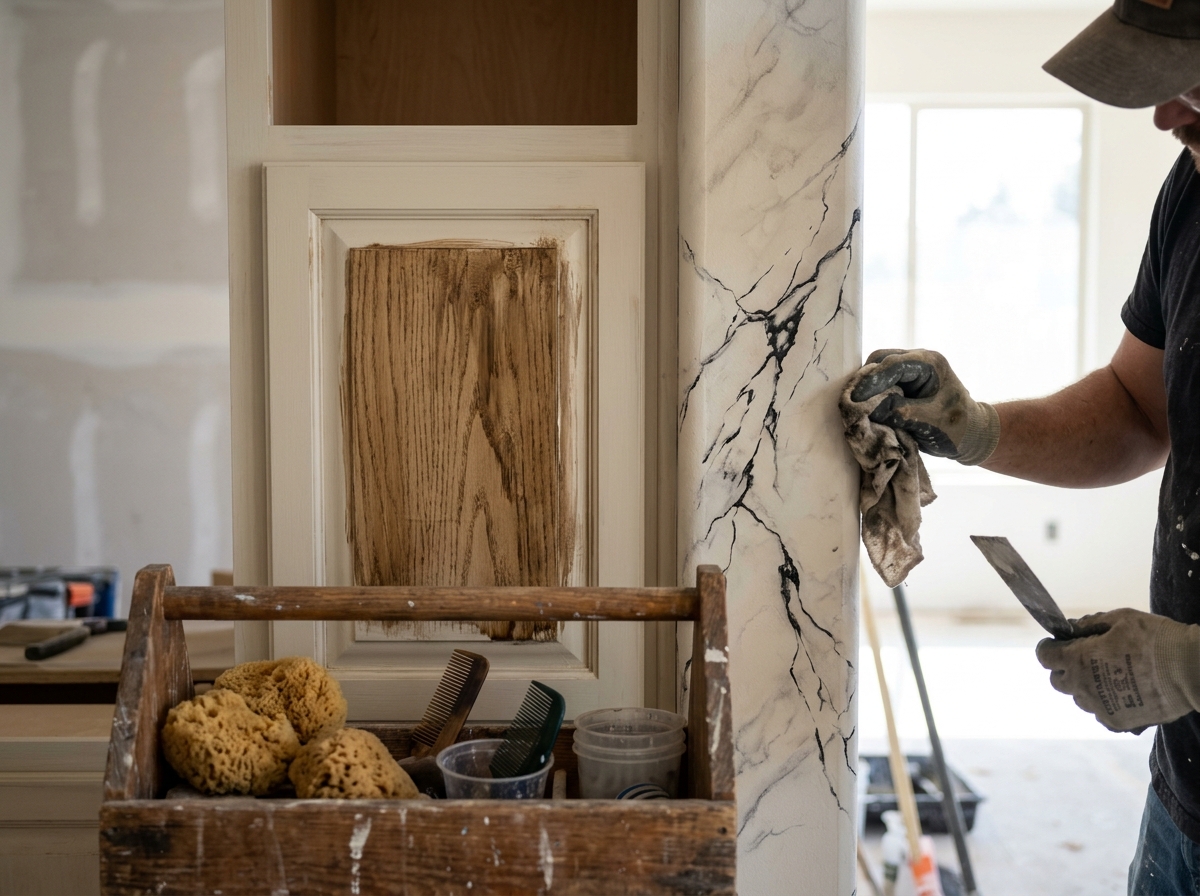
Common Graining And Marbling Applications Mistakes To Avoid
Graining and marbling applications can transform a room, adding elegance and sophistication to walls, trim, and architectural features. But these decorative finishes are unforgiving. A single misstep during application can ruin hours of work and waste hundreds of dollars in materials. Many Redding homeowners attempt these finishes themselves or hire contractors without proper experience, only to discover the results fall short of expectations. Understanding the most common mistakes helps you avoid expensive do-overs and ensures your investment delivers the polished look you envisioned.
Rushing the Surface Preparation Phase
The most frequent mistake we see is inadequate surface prep. Homeowners assume they can apply graining or marbling directly over existing paint, wallpaper, or uneven drywall. This never works.
Graining and marbling applications require a perfectly smooth, properly primed surface. Any imperfection in the substrate telegraphs through the finish. Dust, dirt, old paint flakes, and inconsistent primer coverage create visible defects that undermine the entire effect. The base coat must be uniform in color and texture, or the faux finish will look patchy and amateurish.
Professional surface preparation includes sanding, filling, caulking, and applying quality primer. This step takes 30 to 40 percent of the total project time. Skipping it saves a few hours but guarantees disappointing results. When you're investing in decorative finishes like Graining and marbling applications, the prep work determines success or failure.
Using Low-Quality Materials and Tools
Budget-conscious DIYers often purchase bargain-basement graining tools, cheap glaze, and hardware store brushes. These materials simply cannot replicate authentic marble or wood grain effects.
Professional-grade glaze has the right viscosity and open time (how long it stays workable). Discount glazes dry too quickly, making it impossible to blend and feather the finish properly. Cheap brushes shed bristles and leave streaks. Inadequate tools like foam rollers and sponges cannot create the subtle variations that make graining and marbling look realistic.
In Redding's climate, material quality matters even more. Our temperature fluctuations and low humidity affect how glaze sets. Premium products are formulated to work in these conditions. Bargain materials often dry unevenly or cure to the wrong sheen, creating visible inconsistencies across your walls.
Choosing the Wrong Contractor
Hiring a general painter to execute Graining and marbling applications is a common mistake. Not all contractors have the specialized skill set required for Faux finishes. Painting a wall is straightforward. Creating convincing marble veining or wood grain patterns requires artistic ability, technical knowledge, and extensive practice.
Before hiring, ask contractors specifically about their experience with decorative finishes. Request portfolio photos of completed graining and marbling work. If they show minimal examples or seem hesitant to discuss their process, they likely lack expertise. Contractors who specialize in faux finishes understand color theory, blending techniques, and how to create depth and movement in the finish.
In Redding, several contractors claim they can do faux work, but few truly excel at it. Investing in a specialist prevents costly mistakes and delivers superior results.
Attempting Complex Designs Without Training
Graining and marbling applications come in many styles. Simple approaches like basic marble effects are more forgiving. Complex designs with intricate veining, multiple color layers, and realistic wood grain patterns demand advanced technique.
Many homeowners see an Instagram photo of beautiful marble walls and assume they can replicate it with YouTube tutorials. The reality is harsh. Creating convincing marble veining requires understanding how light interacts with stone, how natural veins flow and intersect, and which color combinations read as authentic. One poorly placed vein ruins the illusion.
Similarly, wood grain effects need directional consistency, appropriate color variation, and subtle texture layering. A single session of practice does not develop these skills. Even experienced painters spend years perfecting faux finish techniques.
Start with simpler finishes if you're determined to DIY. But for intricate Graining and marbling applications, professional execution is the only path to satisfactory results.
Ignoring Environmental Conditions During Application
Redding's climate presents specific challenges for Graining and marbling applications. Temperature, humidity, and air circulation directly affect how glaze behaves.
Applying these finishes in direct sunlight causes rapid drying, preventing proper blending. Humid conditions slow drying and can cause adhesion issues. If your HVAC system is running during application, moving air can create uneven drying and streaking. Cold temperatures thicken glaze and slow curing times.
Professional painters schedule work during optimal conditions and control the environment. They may temporarily close vents, adjust thermostat settings, or schedule early morning application to avoid afternoon heat. DIYers rarely consider these factors, resulting in poor glaze behavior and unsatisfactory finishes.
Skipping Proper Sealing and Protection
After Graining and marbling applications cure, many homeowners assume the job is complete. In reality, these decorative finishes need protection.
Unsealed Faux finishes are vulnerable to dust accumulation, moisture, and UV fading. Without proper topcoat, your beautiful marbling or graining dulls and deteriorates within months. High-moisture areas like bathrooms and kitchens require water-resistant sealers. High-traffic areas need durable topcoats that withstand wear.
The right sealer preserves the finish's appearance and extends its lifespan. Choosing the wrong topcoat can yellow the colors, create unwanted sheen variations, or trap moisture beneath the surface. Professional painters select sealers matched to the specific finish and location requirements.
Neglecting Long-Term Maintenance
Even properly executed Graining and marbling applications require maintenance. Dust settles on the surface. Sunlight fades colors. Minor damage occurs from daily life.
Homeowners who expect these finishes to remain pristine forever are disappointed. Regular gentle dusting, occasional touch-ups, and periodic professional inspection keep the finish looking fresh. Ignoring maintenance allows small issues to become major problems requiring complete refinishing.
Professional painters discuss maintenance requirements upfront and provide guidance on cleaning and care. This conversation prevents misunderstandings and helps homeowners protect their investment.
Graining and marbling applications transform spaces when executed correctly. The most common mistakes stem from inadequate preparation, material quality issues, contractor selection, environmental oversight, and insufficient protection. Rather than risk expensive failures, invest in professional expertise. American Home Painting specializes in decorative finishes including graining and marbling applications for Redding homeowners. We handle proper surface prep, use premium materials, control application conditions, and provide appropriate sealing and maintenance guidance. Contact us for a consultation to discuss your decorative finish project and avoid the pitfalls that compromise results.